
If you’ve ever torn through a drawer looking for a birth certificate or an insurance card, you already know why it helps to organize important documents before you need them in a hurry. This isn’t about creating a perfect filing system. It’s about giving your family a clear, calm place to look when life gets hard, so they can spend their energy on each other instead of searching through boxes.
The good news is that you don’t need special software or a weekend of stress to get this done. A simple, honest system — one that you actually keep up with — beats a fancy one you abandon after a month. Here’s how to build one that works for real life.
Why It Helps to Organize Important Documents Now
Most families don’t think about paperwork until they’re standing in a hospital hallway or sitting at a funeral home, trying to answer questions they weren’t ready for. Having documents organized ahead of time means someone can find a will, a policy number, or a doctor’s name in minutes instead of hours.
This kind of preparation is a quiet gift. It says, “I thought about you, and I wanted to make this easier.” That’s really the heart of it — not fear, just care.
If you want a broader view of how this fits into your overall planning, this guide on why to keep an end-of-life planner is a helpful place to start.
The Best Way to Organize Important Documents at Home
There’s no single “correct” system, but most families do well with a mix of physical and digital storage. The best way to organize important documents at home usually includes three layers: a master list, a physical binder or file box, and a backup digital copy.
1. Start With a Master List
Before you touch a single folder, write a simple list of every document category you can think of. This list becomes your table of contents and helps you notice what’s missing.
- Identification (birth certificates, Social Security cards, passports)
- Legal documents (will, trust, power of attorney)
- Financial accounts (bank, retirement, investment statements)
- Insurance policies (life, health, home, auto)
- Property records (deeds, titles, mortgage papers)
- Medical information (records, directives, medication lists)
- Digital access (password manager info, key accounts)
You don’t have to fill in every category today. Just having the list started is real progress.
2. Choose a Physical Home for Your Papers
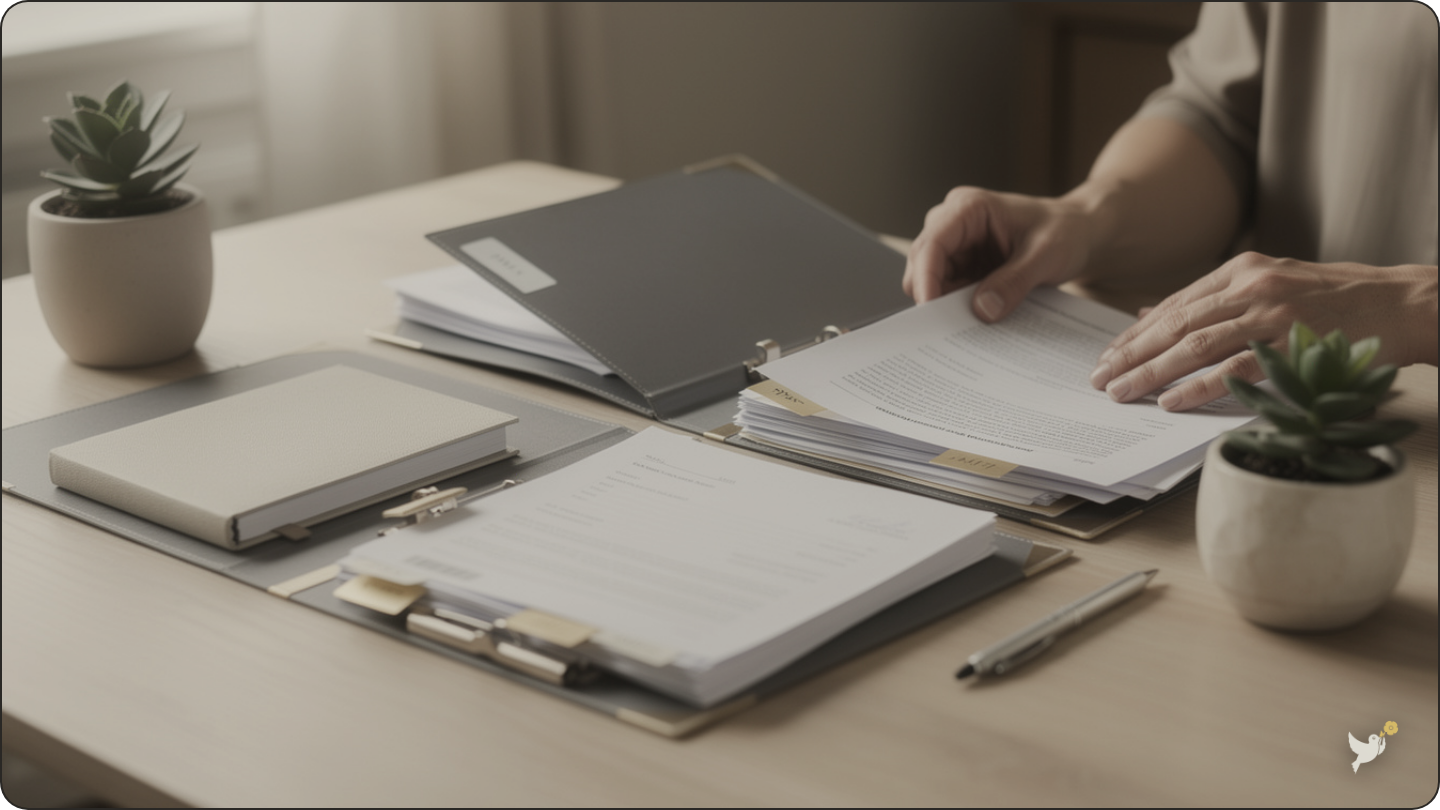
Many people like to organize important documents in a binder because it’s easy to flip through, doesn’t require electricity, and can be picked up in a hurry if needed. A binder with labeled tabs and clear plastic sleeves works well for most households.
If you prefer something more heavy-duty, a small fireproof, water-resistant box or file safe is a smart addition for original documents like birth certificates, deeds, and passports. You can keep a copy in the binder and the original in the safe.
3. Back Everything Up Digitally
Paper can be lost, damaged, or hard to share quickly. A scanned digital copy, stored securely, adds a helpful layer of protection. This is especially useful if a family member lives far away and needs quick access to a document.
Keep digital files organized in clearly labeled folders, and make sure whoever might need them knows how to get in. For guidance on keeping those digital files safe, this password security guide offers simple, practical tips.
How to Organize Important Documents in a Binder
A binder system is one of the simplest, most approachable ways to get started, especially if paperwork feels overwhelming. Here’s a simple structure that works for most families.
Step 1: Gather Everything in One Place
Set aside an afternoon and pull every important paper you can find into one pile. Don’t sort yet — just collect. This step alone often brings a surprising sense of relief.
Step 2: Sort Into Broad Categories
Use the master list from earlier to sort papers into groups. Don’t worry about being perfect. You can always adjust categories later.
Step 3: Add Tabs and Labels
Give each category its own tab. Common sections include:
- Personal identification
- Legal and estate documents
- Financial accounts
- Insurance policies
- Property and vehicle titles
- Medical information
- Contacts and instructions
Clear labels matter more than pretty labels. The goal is that anyone in your family could open the binder and understand it, even if they’re stressed or unfamiliar with your system.
Step 4: Add a One-Page Summary
At the very front, include a short summary page listing where key items are kept, such as the location of a safe, a lawyer’s contact information, or where the digital backup lives. This single page often saves the most time in an emergency.

How to Organize Important Documents Simply and Safely
Simplicity and safety go hand in hand. A system that’s too complicated won’t get used, and one that isn’t secure could put your family at risk of identity theft or lost originals.
Keep It Simple
- Use plain language on labels instead of abbreviations only you understand.
- Limit categories to what you truly need — five to eight sections is usually enough.
- Review and update the binder once or twice a year, such as during tax season or a birthday.
Keep It Safe
- Store original documents in a fireproof, water-resistant box or a bank safe deposit box.
- Keep digital backups in a secure, password-protected location.
- Tell at least one trusted person where everything is kept — a hidden system helps no one.
If you’re weighing a physical fireproof box for your home, a compact Fireproof Document Box on Amazon is a simple, affordable way to protect originals like birth certificates and deeds.
What Belongs in Your Document System
It helps to know exactly what to organize important papers around. Here’s a general checklist to guide you, though your own list may look a little different depending on your situation.
Personal and Legal
- Birth certificate and Social Security card
- Marriage certificate or divorce decree
- Passport or state ID
- Will, trust, and power of attorney documents
If you’re not sure what a power of attorney actually does or whether you need one, this simple guide to power of attorney breaks it down in plain language.
Financial
- Bank and credit union account information
- Retirement and investment account statements
- Insurance policy numbers and contacts
- Recent tax returns
Property and Medical
- Home deed or mortgage documents
- Vehicle titles and registration
- Advance directives or medical power of attorney
- List of current medications and doctors
For a deeper look at how your documents connect to your broader wishes, this estate planning guide offers a calm overview of the bigger picture.
Don’t Forget Your Digital Legacy
Important documents aren’t only paper anymore. Email accounts, photo storage, social media, and financial apps are part of your family’s picture too. Taking time to organize important documents should include a plan for these digital pieces as well.
A simple list of key accounts, along with instructions for what you’d like done with them, can prevent a lot of confusion later. For a full walkthrough, see how to create a digital legacy plan.

Keeping Your System Updated
An organized system only stays helpful if it’s current. Set a reminder twice a year to review your binder or folder and update anything that’s changed, such as a new insurance policy, a refinanced mortgage, or a new account.
Small, regular check-ins are far easier than trying to overhaul everything at once. Treat it like a light chore, not a big project.
Documents Alone Aren’t the Whole Plan
Organizing your papers is a meaningful step, but it’s worth knowing that a document binder or planner isn’t a replacement for a legally valid will. This article on planners versus wills explains the difference clearly, so you know exactly what each one does.
If you’re looking for a ready-made structure to help you organize important documents alongside your wishes and instructions, our book walks through the process step by step: I’m Dead, Now What? was designed to make this kind of planning approachable for any family.
A Simple Way to Get Started Today
You don’t need to finish this in one day. Start small: gather a few key documents, choose a binder or box, and write that one-page summary. Each small step makes things easier for the people you love.
For more ideas on approaching this project without feeling overwhelmed, 5 Ways to Organize Important Documents for Your Family offers additional practical approaches. And if you’d like a broader roadmap for the whole planning process, this end-of-life planning checklist is a solid next stop.
You can also find general guidance on protecting personal records from organizations like the USA.gov guide to replacing vital documents and the Ready.gov financial preparedness resources, both of which offer trustworthy, plain-language information.
This article is for general informational purposes only and is not legal, financial, tax, or medical advice. Rules vary by state and change over time; please consult a qualified professional about your specific situation.
Taking the time to organize important documents is one of the simplest, most caring things you can do for your family. It won’t erase every hard moment, but it can remove one layer of stress, and that’s a meaningful gift in itself. If you have more questions about getting started, our FAQ page and blog have more resources, and you’re always welcome to reach out directly with questions.
Frequently asked questions
What is the best way to organize important documents at home?
Most families do well with a simple combination: a labeled binder or folder for everyday access, a fireproof box for original documents like birth certificates and deeds, and a secure digital backup. The key is choosing a system you’ll actually keep updated.
How do I organize important documents in a binder?
Gather all your papers first, sort them into a few broad categories like legal, financial, and medical, add labeled tabs for each section, and include a one-page summary at the front listing where key items and contacts can be found.
What documents should I include when I organize important papers?
A good starting list includes identification documents, legal papers like a will or power of attorney, financial account information, insurance policies, property records, and medical directives. Your own list may vary based on your situation.
How often should I update my document organization system?
Reviewing your system twice a year is a reasonable goal for most families. Update it whenever something significant changes, such as a new insurance policy, a home purchase, or a new financial account.
Is a document binder the same as a will?
No. A document binder or planner is a helpful organizing tool, but it does not replace a legally valid will. It’s important to understand the difference and make sure you have proper legal documents in place as well.