
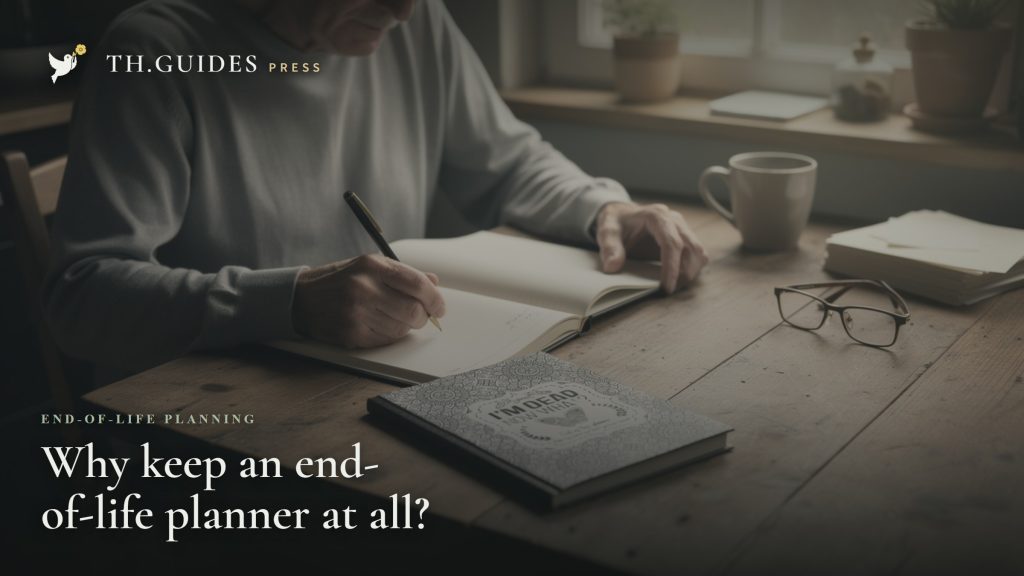
An end-of-life planner is a simple, organized place to write down what your family would need to know if you became seriously ill or passed away. Think of it as a quiet gift to the people you love, a way to spare them from searching through drawers and guessing at your wishes during an already difficult time.
You don’t need to be older or unwell to start one. An end-of-life planner is really just good household organization, gathered in one trusted spot. This guide explains what it is, what goes inside, and seven gentle steps to begin, at whatever pace feels right for you.
What an End-of-Life Planner Actually Is
An end-of-life planner is a document or notebook where you collect the practical details of your life: accounts, contacts, wishes, and where important papers live. It answers the questions your family would ask if they had to step in and act on your behalf.
It comes in many forms. Some people prefer an end of life planner book they can write in by hand. Others like a printable end of life planner pdf or a digital file they can update easily. There are ready-made products too, such as the end of life planner by Lamorial, along with templates made for different countries, like an end-of-life planner canada template or an end of life planner uk version. The best format is simply the one you’ll actually use.
One thing to understand early: a planner is not a legal will. It organizes information and shares your preferences, but it doesn’t distribute property or replace legal documents. If you’d like to see how the two work together, read A planner is not a will — and why you likely need both.

Why Keep an End-of-Life Planner
When someone dies or becomes incapacitated, families often face a scramble. Where are the account numbers? Who is the insurance agent? Did Mom want to be buried or cremated? Without answers, loved ones spend precious energy hunting for details instead of grieving and supporting one another.
An end-of-life planner turns that scramble into a short, clear reference. It reduces stress, prevents missed bills and lapsed policies, and honors your voice at a moment when you may not be able to speak. If you’re weighing whether it’s worth the effort, our overview on why keep an end-of-life planner at all may help.
Who benefits most
- A spouse or partner who would suddenly manage everything alone
- Adult children who live far away and don’t know your routines
- Friends or executors you’ve asked to help settle affairs
- You, right now, from the calm of knowing it’s handled
What to Put in Your End-of-Life Planner
You don’t have to fill every page at once. Start with what you know and add more over time. Most complete planners cover a handful of core areas.
1. Personal and emergency information
Your full legal name, date of birth, address, and government ID numbers, kept securely. Include the people who should be called first and how to reach them. For ideas on what belongs here, see what information your family should know in an emergency.
2. Important documents and where they live
Note the location of your will, insurance policies, property deeds, vehicle titles, birth and marriage certificates, and tax records. You don’t need to copy every document into the planner, just point to where each one is stored. Our guide on how to organize important documents in one secure place pairs well with this step.
3. Financial and account details
List bank accounts, retirement accounts, debts, recurring bills, and the professionals who help you, such as an accountant or financial advisor. Keep sensitive numbers protected, and never write full passwords in a place others could stumble upon.
4. Digital life
Email, phone, social media, subscriptions, and photo storage all need attention now. A short digital legacy plan explains who should access what and what you’d like done with each account.

5. Health care wishes
Your planner can note where to find your advance directive, living will, or health care power of attorney, along with your doctors and any conditions or medications. These are legal and medical documents, so complete the official forms for your state with proper guidance. The National Institute on Aging offers a clear starting point for advance care planning.
6. Final wishes and preferences
Here you can share how you’d like to be remembered: burial or cremation, service preferences, music, readings, or a favorite charity. If putting words to this feels hard, our list of questions to discuss with loved ones about final wishes can guide the conversation gently.
Seven Simple Steps to Start Your End-of-Life Planner
Building an end-of-life planner is easier when you break it into small, doable tasks. Here’s a calm path forward.
Step 1: Choose your format
Decide whether you want a printed end of life planner book, a fillable end of life planner pdf, or a secure digital document. Any of these works. If you like structure, a guided workbook such as the one you can find on our book landing page walks you through each section.
Step 2: Start with the easy facts
Fill in the details you already know by heart: names, addresses, phone numbers, and emergency contacts. Getting a few pages done quickly builds momentum.
Step 3: Map where your documents are
Walk through your home and note where key papers actually live, then write those locations into your planner. For a room-by-room approach, see 5 ways to organize important documents for your family.
Step 4: Add accounts and finances
List your accounts and regular bills so nothing lapses. Keep account numbers secure and store login help separately, not spelled out in plain view.
Step 5: Record your health and final wishes
Note where your advance directives are and jot down your preferences for care and remembrance. Take your time; this section can be revisited whenever you feel ready.
Step 6: Store it safely and tell someone
Keep your end-of-life planner somewhere secure but findable, such as a fireproof box or an encrypted digital folder. A planner no one can find helps no one, so read how to tell your family the planner exists.
Step 7: Review it regularly
Life changes, and so should your planner. A quick yearly check keeps it accurate. Our note on how often to update your planner offers a simple rhythm to follow.

Planner Formats and Regional Templates
Because rules and paperwork differ by location, many people look for a planner made for their country. An end of life planner canada resource or end-of-life planner canada template may reference Canadian terms and forms, while an end of life planner uk version fits British systems. In the United States, remember that laws also vary from state to state.
Whatever template you choose, the core idea stays the same: gather your information in one calm place. You can adapt any general end-of-life planner to your own needs, and you can always print an end of life planner pdf to write in by hand. For official U.S. guidance on getting affairs in order, the National Institute on Aging offers a helpful checklist on getting your affairs in order, and USA.gov explains where to find help with wills and estate settlement.
How a Planner Fits With Your Larger Plan
An end-of-life planner works best alongside legal tools like a will, powers of attorney, and estate documents. The planner organizes and communicates; the legal papers carry out your legal wishes. To see the bigger picture, our estate planning guide and this end-of-life planning checklist give you a full, calm roadmap. For general reading on the legal side, you can also visit our legal page.
A Gentle Final Word
Creating an end-of-life planner is not about dwelling on loss. It’s about care, clarity, and love. Every page you fill in is one less question your family will face on a hard day, and one more way your voice stays with them.
Start small. Choose a format today, write down the easy facts, and build from there. The peace of mind you’ll feel, and the relief you’ll give your loved ones, is well worth the quiet effort.
This article is for general informational purposes only and is not legal, financial, tax, or medical advice. Rules vary by state and change over time; please consult a qualified professional about your specific situation.
Frequently asked questions
Is an end-of-life planner the same as a will?
No. An end-of-life planner organizes your information and shares your wishes, but it does not legally distribute your property. A will is a legal document. Most families benefit from having both.
What should go in an end-of-life planner?
Core sections include personal and emergency information, where your documents are stored, financial and account details, your digital accounts, health care wishes, and final preferences such as service and remembrance choices.
Can I use a digital or PDF end-of-life planner?
Yes. Many people use an end of life planner pdf or an encrypted digital file. Just keep sensitive information secure and make sure a trusted person can find and access it when needed.
How often should I update my end-of-life planner?
A quick review once a year works well, plus updates after major life events like a move, marriage, new account, or change in health. This keeps the information accurate and useful.
Are there end-of-life planners made for specific countries?
Yes. You can find templates tailored to different regions, such as a Canada template or a UK version. Choose one that matches your location’s paperwork, and remember U.S. rules also vary by state.
If you would rather not build this from scratch, the I’m Dead, Now What? planner gives your family a ready-made place to record every one of these details.