
There are few moments as disorienting as the hours right after a loss. Grief and a long list of practical tasks arrive at the same time, and it can be hard to know where to even begin. If you are trying to work out what to do when someone dies, this guide lays it out one calm step at a time — what happens first, what can wait, and who needs to be told — so you can move through it without feeling buried.
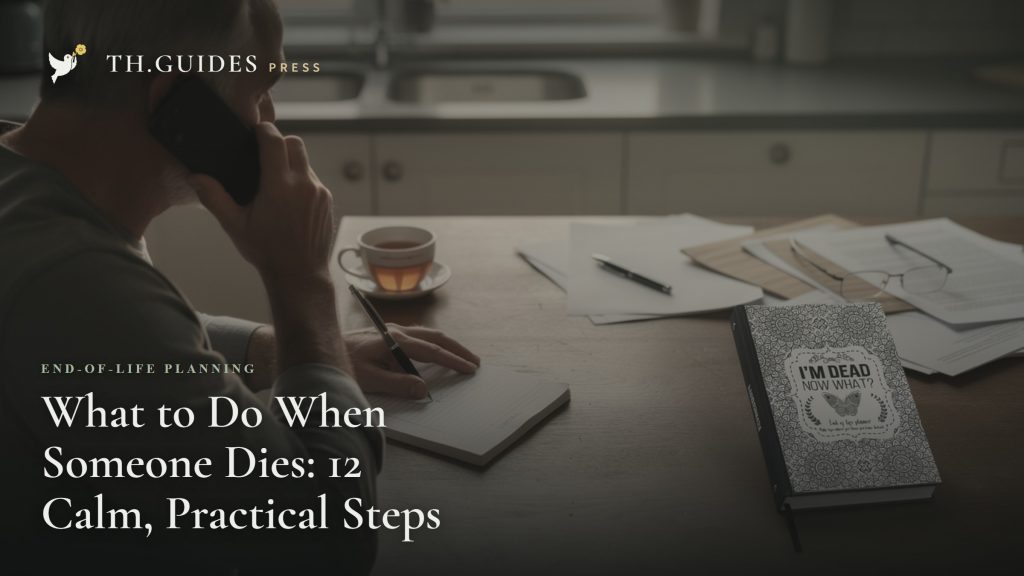
Take it slowly. Almost nothing on this list has to happen in the first hour, and doing one thing well is better than rushing through five. Keep a single notebook, or a guided workbook like the I’m Dead, Now What? planner if your loved one left one, close by to capture names, numbers, and what you have already done.
The first hours: what to do when someone dies
What to do when someone dies depends, first of all, on where the death happens. If your loved one was under hospice care, call the hospice line and they will guide you and handle the formal pronouncement. If they were in a hospital or care facility, the staff will take the first steps with you. If the death was unexpected and at home, call 911. A death must be formally pronounced before anything else can proceed, so let the professionals lead here.
Once that is done, there is no rush. Contact close family, and reach out to a funeral home or cremation provider when you are ready — they will collect your loved one and begin guiding you through arrangements. If your loved one recorded their wishes, now is the moment to look for them, because they will shape the decisions ahead. Very little else belongs on day one: when someone dies, that first day is for the pronouncement, the funeral home, and the people closest.

Within the first few days
Over the next few days, the practical side of what to do when someone dies comes into focus, and a handful of tasks matter most. Decide on and begin funeral, burial, or cremation arrangements, guided by any wishes your loved one left. Ask the funeral home to order certified copies of the death certificate — order more than you think you need, because banks, insurers, and government agencies each require an original.
Secure your loved one’s home and property: bring in mail, arrange care for any pets, and make sure the house is locked and looked after. Look for the essential documents — the will, insurance policies, and financial records. If your loved one kept them together, this step is simple; if not, our guide on how to organize important documents securely can help you find and protect what you uncover. A fireproof document bag is a practical way to keep the originals together and safe while the estate is settled.
Who to notify when someone dies
One of the biggest tasks when someone dies is letting the right people and institutions know. The Social Security Administration should be notified promptly; the funeral home often reports the death, but you can confirm it directly through the SSA survivors resources. Notify the deceased’s employer, banks and credit-card companies, insurers, and any pension or retirement plan administrators. The federal government’s plain-language overview of what to do after someone dies is a helpful companion checklist. Because this step is so involved, we cover it in depth in our guide on who to notify when someone dies.

Settling the estate
In the weeks that follow, the estate itself needs to be settled — the longest-running piece of what to do when someone dies. If there is a will, it names an executor to carry out this work; if not, the probate court appoints an administrator. That person gathers and values assets, pays valid debts and final taxes, and distributes what remains to the heirs. Keeping careful records matters here, and an estate and executor organizer can make an unfamiliar job far more manageable. If the estate is straightforward, you may be able to handle much of it yourself; if it is large or contested, an estate attorney is well worth the cost.

The first weeks: what can wait when someone dies
Once the immediate arrangements are made, the pace slows — and that is a relief. Much of what feels urgent when someone dies can actually wait. Bills in the deceased’s name generally should not be paid out of your own pocket; they are the estate’s responsibility, and the executor settles them in an orderly way once the full picture is clear. Subscriptions, memberships, streaming services, and utilities can be closed over the following weeks as you work methodically through the accounts. And the hardest tasks — sorting belongings, clearing a closet, deciding what to keep — can and should wait until you are ready. There is no prize for finishing quickly.
It helps to keep one running list of everything you have done and everything still outstanding, each with a date. When someone dies, it is the sheer number of small tasks that overwhelms people, not any single one of them. A written record turns a vague, anxious weight into a finite checklist you can chip away at a little at a time. Review it once a week, cross off what is finished, and carry the rest forward without guilt. If two or three relatives are sharing the load, one shared list keeps everyone from duplicating calls or missing something entirely.
This is also where a completed planner proves its worth. If your loved one filled one out, the account numbers, contacts, logins, and wishes are already gathered in one place, and you are simply following a map rather than searching for one in drawers and inboxes. If they did not leave one, you are building that map yourself as you go — which is exactly why so many people, having been through this once, quietly start their own plan afterward so their family never has to.
Give the grief its place
It is easy, in the rush of logistics, to treat what to do when someone dies as purely a checklist. It is not. You are grieving while you work, and that changes what is reasonable to expect of yourself. Accept the meals friends drop off, say yes when someone offers to make calls or watch the children, and protect a little quiet each day that has nothing to do with paperwork. The tasks will still be there after you have rested, and your capacity to face them returns faster when you are not running on empty.
Grief has no timetable, and it rarely moves in a straight line. Some days the practical steps will feel manageable; other days, making a single phone call will be all you can do — and that is enough. Be as patient with yourself as you would be with a friend in your place. Handling things gently, one careful step at a time, is not a lesser way through this; it is the wiser one. Knowing what to do when someone dies is genuinely useful — but leaving room to grieve while you do it matters just as much.
Common mistakes to avoid
A few missteps come up again and again. Ordering too few death certificates is the most common — reorder early rather than waiting. Rushing major financial or property decisions while grieving is another; most can wait weeks or months. Closing accounts before the executor has a full picture can create problems, so pause before cancelling anything. And forgetting digital life — email, subscriptions, and social media — leaves loose ends that surface later. Working from a simple end-of-life planning checklist keeps these from slipping through the cracks.
Take care of yourself, too
Amid the paperwork, remember that you are grieving. Lean on friends who offer to help with meals, calls, or errands, and let them. Keeping a grief support journal gives your thoughts somewhere to land on the hardest days. There is no schedule for grief, and the administrative tasks will still be there after you have rested. Handling things gently, a little at a time, is not only allowed — it is the wiser way through.
Frequently asked questions
What is the very first thing to do when someone dies?
It depends on where the death happens. If the person was in hospice or hospital, the staff will guide you and handle the legal pronouncement. If they died at home unexpectedly, call 911. If it was expected and at home under hospice care, call the hospice line rather than 911. Only after the death is formally pronounced do the practical steps begin — so give yourself permission to pause and breathe first.
How many copies of the death certificate do I need?
Most families order 10 to 15 certified copies. Banks, insurers, the Social Security Administration, and title or property transfers each typically require an original certified copy, and they are far easier to order at the start than months later. The funeral home can usually order them for you.
Who legally handles everything when someone dies?
If there is a will, it names an executor (sometimes called a personal representative) who is responsible for settling the estate. If there is no will, the probate court appoints an administrator, usually the closest next of kin. Either way, that person handles notifications, debts, and distributing assets — ideally guided by the deceased’s planner and documents.
Do I have to go through probate?
Not always. Small estates, assets held jointly, and accounts with named beneficiaries (like life insurance or retirement accounts) often pass outside probate. Whether formal probate is required depends on your state and the size and structure of the estate, so it is worth asking an attorney early rather than assuming.
If you’d like a ready-made place to gather everything above, the I’m Dead, Now What? planner keeps it together in one guided book.
This article is for general informational purposes only and is not legal, financial, tax, or medical advice. Rules vary by state and change over time; please consult a qualified professional about your specific situation.